
According to Idioms.thefreedictionary.com, “your angle” is your understanding of something. It’s your unique perspective on an event or happening. That’s one angle on “your angle.”
But Urbandictionary.com has another take on the expression. It says that when someone asks, “What’s your angle?” you’re asking another person what his or her intentions or motives are, often in a cynical manner.
For example, your 14-year-old voluntarily announces that he’ll take out the trash, clean his room and help organize the garage. Because you know your kid, you naturally respond, “What? So, what’s your angle?” “Oh, nothing,” your kid responds. “Just want to do my part.” But a few hours later, he subtlety hints that the new Madden NFL ’23 is on sale today at Game Stop for $30. In that moment, you understand his angle.
When it comes to leading — whether it’s your family, business team, your child’s baseball team, a non-profit, the church you pastor, the board you serve on, or some civic club or organization — what’s YOUR angle? In other words, what’s your MOTIVE for leading, managing and doing what you do?
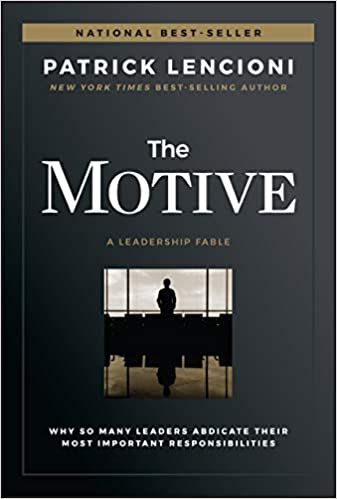
In his book, The Motive, New York Times best-selling author, Patrick Lencioni writes that there are two potential MOTIVES or ANGLES for being a leader at any level in any organization.
REWARD-centered leadership
vs
RESPONSIBILITY-centered leadership
The first possible motive is REWARD-centered leadership. It’s the belief, sometimes even the unconscious belief, that being a leader is the reward for lots of hard work. Because of that, leading should be a fun and enjoyable ride with access to power, privilege, attention, perks, more money and increased leisure time. Any and all aspects of the job that are difficult, challenging and uncomfortable can be delegated to subordinates. After all, you worked hard to become the leader. It’s time to enjoy the perks and rewards. Unfortunately, this is the angle far too many bring to their role as a leader.
On the other hand, RESPONISIBLITY-centered leadership is the belief that leadership is a trust and a responsibility. It’s an opportunity to serve people and to add value to their lives. Because of that, you take it seriously. You recognize that leadership is hard, difficult and challenging work. In fact, sometimes you’ll suffer loss, because real leadership always requires a heart to serve and a willingness to sacrifice. But, in the end, RESPONSIBILITY-centered leadership is the only kind of leadership that makes a lasting difference and leaves a meaningful legacy.
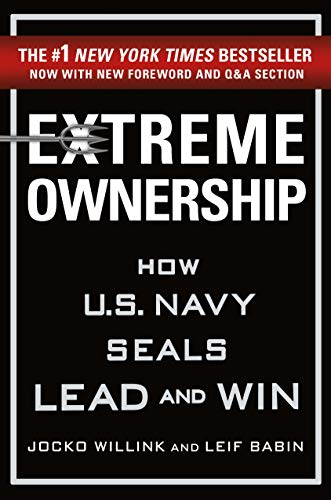
Retired Navy Seal, Jocko Willink, describes a RESPONSIBILITY-centered leader like this: “On any team, in any organization, all responsibility for success and failure rests with the leader. The leader must OWN everything in his or her world. There is no one else to blame. The leader must acknowledge mistakes and admit failures, take ownership of them, and develop a plan to win. The best leaders don’t just take responsibility for their job. They take EXTREME OWNERSHIP of everything that impacts their mission...” Willink titles his book on the same subject, Extreme Ownership.

Several years ago, Jim Collins in his business classic, Good To Great, described the kind of leadership that takes a company from “good” to being truly “great” as a “Level 5 Leader.” This leader is a blend of two qualities: 1) Humility, which means they’re “others focused.” They’re consistently focused on the people they lead, not on themselves. 2) They possess a strong professional will, which Collins defined as the willingness of the leader to do the right thing for his people and the organization, not the easy or convenient thing.
Both Collins and Willink were describing what Lencioni called a RESPONSIBILITY-centered leader.
What kind of leader are YOU?
What’s YOUR ANGLE or MOTIVE for leading?
MOTIVES matter more than we can imagine. WHY we do WHAT we do is just as important as WHAT we do.
“If you do the right thing for the wrong reason,
you’ll eventually end up doing the wrong thing.”
Psalm 139:23 contains a prayer of an incredible leader named David. In this prayer, David actually invited to examine his motives and check his angle.
“Investigate my life, O God, find out everything about me;
Cross-examine and test me, get a clear picture of what I’m about…”
—PSALM 139:23 MSG
He goes on to ask God, “Point out anything in me that offends you…”
That’s a prayer that every leader may want to make a regular and consistent part of their life and leadership. Why?
Because MOTIVES aren’t permanent, constant and consistent. They can change. Especially when leaders go on auto-pilot. A person who began leading as a RESPONSIBILITY-centered leader can become enamored with, driven by or put to sleep on the perks and privilege of being a leader and unconsciously drift into becoming a REWARD-centered leader.

That’s why the, “What’s YOUR angle?” question is so crucial and critical for leaders to keep coming back to.
Of course, the ultimate RESPONSIBILITY-centered leader was Jesus Himself. He described the kind of leadership we should aspire to with these words.
“Kings and those with great authority in this world rule oppressively over their subjects, like tyrants. But this is not your calling. You will lead by a completely different model. The greatest one among you will live as the one who is called to serve others, because the greatest honor and authority is reserved for the one with the heart of a servant. For even the Son of Man did not come expecting to be served but to serve and give his life in exchange for the salvation of many.”
—MATTHEW 20:25-28 TPT
Patrick Lencioni closes his book with a short chapter titled, “The End of Servant Leadership.” I love the vision for leadership he describes.
“I fear that too many people have come to tolerate, even expect, leaders to be self-centered. Too many employees are resigned to executives in their company who take action only when it is in their own interests. Too many executives are resigned to working for CEOs who can’t be expected to do the things they find uncomfortable or uninteresting. And too many citizens are resigned to civic leaders who make decisions about policy based on their poll numbers and their ability to get elected or be popular.
“And so, if reward-centered, self-centered leadership becomes the norm, young people will grow up believing that this is what it means to be a leader. The wrong people will aspire to be managers, CEOs, and civic leaders, condemning society to more of the same for generations to come. This can’t be allowed to happen.
“I believe it’s long past time that we, as individuals and as a society, reestablished the standard that leadership can never be about the leader more than the led. Employees need to point out reward-centered leadership when they see it in their managers. Executives need to commit to changing it when they realize it is true about themselves. And citizens need to speak out against it when they see it in their appointed and elected civil servants.
“If we can restore the collective attitude that leadership is meant to be a joyfully difficult and selfless responsibility, I am convinced that we will see companies become more successful, employees more engaged and fulfilled, and society more optimistic and hopeful. Perhaps people will stop using the term ‘servant leadership’ altogether, because everyone will understand that it is the only valid kind. And that is certainly worth doing.” —Patrick Lencioni, The Motive, pp 169-170. Wiley. Kindle Ed.
So, what’s YOUR angle?