
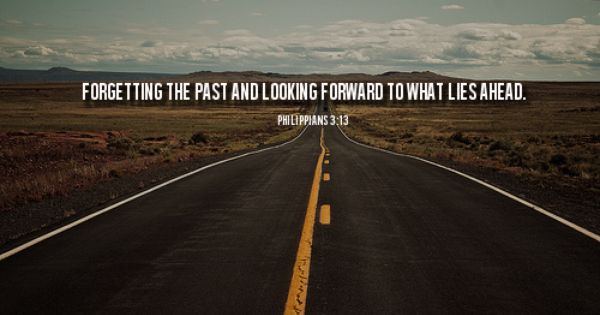
“Forget the former things; do not dwell on the past. 19 See, I am doing a new thing! Now it springs up; do you not perceive it? I am making a way in the wilderness and streams in the wasteland.” —ISAIAH 43:18-19 NIV
“Forget about what’s happened; don’t keep going over old history. Be alert, be present. I’m about to do something brand-new. It’s bursting out! Don’t you see it? There it is! I’m making a road through the desert, rivers in the badlands.”
—ISAIAH 43:18-19 MSG
…I focus on this one thing: Forgetting the past and looking forward to what lies ahead, 14 I press on to reach the end of the race and receive the heavenly prize for which God, through Christ Jesus, is calling us. —PHILIPPIANS 3:13b-14 NLT
Forgetting is hard.
Memory is a powerful thing.
The human mind is stunning in its ability to hold on to entire simulated reenactments of events and experiences from our past and bits and pieces of information we once ran across.
According to research, forgetting requires more effort than remembering. Think about that the next time you “forget” where you put your car keys. Maybe you just need to “remember” where you put them instead. Ha!
“Forgetting memories may take more mental effort than continuing to remember them, according to a US brain imaging study. The scientists asked people to view images, followed by an instruction either to forget them, or to remember them. Trying to forget the image caused more brain activity in a region associated with memory than trying to remember it, the scientists say…” —Why It Can Be So Hard To Forget Unwanted Memories, Tue, 12 Mar 2019 [1]
But not only does forgetting require more effort and energy than remembering, but it seems we have a built-in tendency to remember the worst and forget the best.
As Mark Batterson has wisely written:
“…we have a tendency to remember what we should forget and forget what we should remember. That’s how we get stuck in a moment.” —Mark Batterson [2]
In other words, memory can be subjective and selective. Here’s what I mean. Memories of pleasant or pleasurable experiences often get stored somewhere in the “back of our minds” where they’re much more difficult to retrieve and access.
While memories of mistakes, failures, sins, painful events or experiences, emotionally draining arguments, and experiences that made us feel weak, vulnerable and afraid, seem to get stored in our brain on “eye level shelves” for easy and convenient access.
Think about it.
How many times have you winced as you thought about the time you made that stupid statement, did that stupid thing or acted in that stupid way?
It happens all the time, doesn’t it? Daily? Maybe several times a day?
Our mind has this incredible ability to replay over and over again our sins, inadequacies, idiosyncrasies and failures in 4K Ultra High Definition.
Unless you’re some kind of an ego-maniac who sees yourself as flawless, it’s likely that painful memories are much more accessible and available than memories of good, beautiful, loving and grace-filled moments and experiences in life. Those tend to get stuffed way, way, way down; while every painful memory of either mistakes we’ve made or pain perpetrated on us is always lingering right near the surface.
Many scientists believe that the reason for this is that our brain is hard-wired for protection. That our brain keeps painful memories within reach in an attempt to protect us from future painful experiences and events in life. We’re all familiar with the saying, “Those who fail to learn from the past are doomed to repeat it.”
Scientists believe that our brain keeps our perception of painful experiences close so that we won’t end up repeating the same old mistakes over and over again.
Interestingly enough, it seems that both Isaiah and Paul believed that memories of the past can be detrimental and even devastating when it comes to living fully in the present and moving confidently into the future.
Perhaps that’s why Isaiah challenged us:
“Do not dwell on the past… Don’t keep going over old history…” —ISA 43:18
Paul even acknowledged the effort required in forgetting when he wrote:
…I focus on this one thing: Forgetting the past and looking forward to what lies ahead, 14 I press on… —PHIL 3:13b-14 NLT
Paul basically said, “Guys, this requires a level of focus that is astounding. It takes everything in me just to focus on forgetting…”
Interestingly enough, both Isaiah and Paul aren’t simply challenging us to forget the painful aspects of our past, they’re even challenging us to forget the good, beautiful, breakthrough moments, as well.
Why? Perhaps because they’re both aware that we all have a tendency towards one of two responses when it comes to remembering the past:
- We catastrophize it.
We view every memory through our pain, re-envisioning even good and beautiful moments as somehow being less than what they were.
Catastrophizing paints in broad brush strokes — condensing, summing up, summarizing — painting over decades of beauty with broad brushstrokes of ugly. It magnifies every hardship, difficulty, struggle or challenge as being indicative of life. That’s one way we catastrophize.
Another way is that those who catastrophize often become rather punitive to themselves, taking on personal responsibility for events and experiences that were well beyond their sphere of influence or control. But, in their minds, if something bad or painful occurred, then they must be completely responsible for it.
These individuals become overly critical and harsh on themselves, taking on guilt they shouldn’t bear and shame that completely overwhelms them.
Guilt and Shame
At this point, it’s important to point out the difference between guilt and shame.
Guilt says, “You did something wrong.” It’s absolutely essential if we want to become emotionally and mentally healthy human beings. At some point, we do have to take personal responsibility for wrong attitudes, motives, actions, behaviors and words on our part. The fact is, sometimes we are guilty.
Shame, on the other hand says, “You are wrong. To the core of your being, there’s something wrong about you.”
Lewis Smedes describes it like this:
Shame is “…a feeling of heaviness that hovers over a person… It’s the feeling that we do not measure up and that maybe we never will measure up to the person we ought to be and the person we were meant to be.
“Shame carries with it this vague sense of disgust with ourselves… It’s more than struggling with some minor flaw in our character… It can define our identity, cause a loss of dignity and create an incredible amount severe emotional pain.
“It is not necessarily about the bad things we did or bad things we said, it’s about who we are. It’s toxic… It tells us day in and day out that we are unworthy and unloved.” [3]
Shame is not only damaging, it’s destructive. It often becomes the lens through which those who catastrophize their past tend to view themselves, their relationships and their world.
Some of us catastrophize the past.
- We idealize or romanticize it.
Others of us, idealize the past. We make everything — every experience and event in life — look like a Normal Rockwell painting. We minimize our hurts and glamorize every episode we’ve experienced in life. We whitewash the pain and focus on the pleasure. We ignore personal sin and magnify personal success.
Neither catastrophizing or idealizing the past are helpful for those who long to fully live in the present and move with confidence into the future.
Maybe that’s why both Isaiah and Paul, though separated by approximately 700 years, wrote the following:
“Do not dwell on the past… Don’t keep going over old history…” —ISA 43:18
…I focus on this one thing: Forgetting the past and looking forward to what lies ahead, 14 I press on… —PHIL 3:13b-14 NLT
How to FOCUS on FORGETTING:
1. Don’t dwell on the past. Don’t keep going over old history.
You can’t move forward if you keep looking backwards.
Every event and experience in your past has brought you to this moment. Your past is often “graduate school” in the education of your soul.
Learn from it!
Grow thru it.
But refuse to live in it.
Admit and take responsibility for sins and mistakes.
Determine to grow from and thru those same sins and mistakes.
Celebrate every success, victory and breakthrough.
But whatever you do, refuse to live in the past.
Don’t glamorize or romanticize it.
Refuse to allow shame to color it.
Since you can’t change it, be like Paul and focus on forgetting it.
Someone said it like this: “The past is set in stone. The present and future are wet cement…”
Remember this important reality:
“Everything in your past is preparation for something in your future. God doesn’t waste days, especially bad days!” —Mark Batterson [4]
God longs to leverage your past — both your successes and your sin — for His great glory, your ultimate good and the fulfillment of His redemptive purpose and plan!
But don’t dwell on it. Don’t keep going over old history.
2. Live fully in the present.
I love the way Eugene Peterson translated Isaiah 43:18.
“Forget about what’s happened; don’t keep going over old history.
Be alert, be present. I’m about to do something brand-new.
It’s bursting out! Don’t you see it?” —ISAIAH 43:18-19 MSG
Someone once summed up a great philosophy for life with these words:
“Yesterday is history.
Tomorrow is a mystery.
Today is a gift. That’s why they call it the present.”
Paul said the same thing in four words: “Be alert, be present…”
I love the way Maya Angelou summed up the same principle when she wrote:
“If you must look back, do so forgivingly.
If you must look forward, do so prayerfully.
However, the wisest thing you can do is to be present in the present. Gratefully.”
—Maya Angelou
Don’t miss the last line from Angelou: “Be present in the present. Gratefully.” BOOM!
Live in the present!
Live with gratitude!
Make the most of every moment you have.
Ephesians 5:17 gives us the same challenge:
“…watch your step. Use your head. Make the most of every chance you get…”
—EPHESIANS 5:17 MSG
The same author of Ephesians 5:17 wrote the words that appear near the top of this post from Philippians 3.
“Focus on this one thing: Forgetting the past and looking forward to what lies ahead,
I press on…”
“Pressing on” involves action in the present. It involves decisions I can make today.
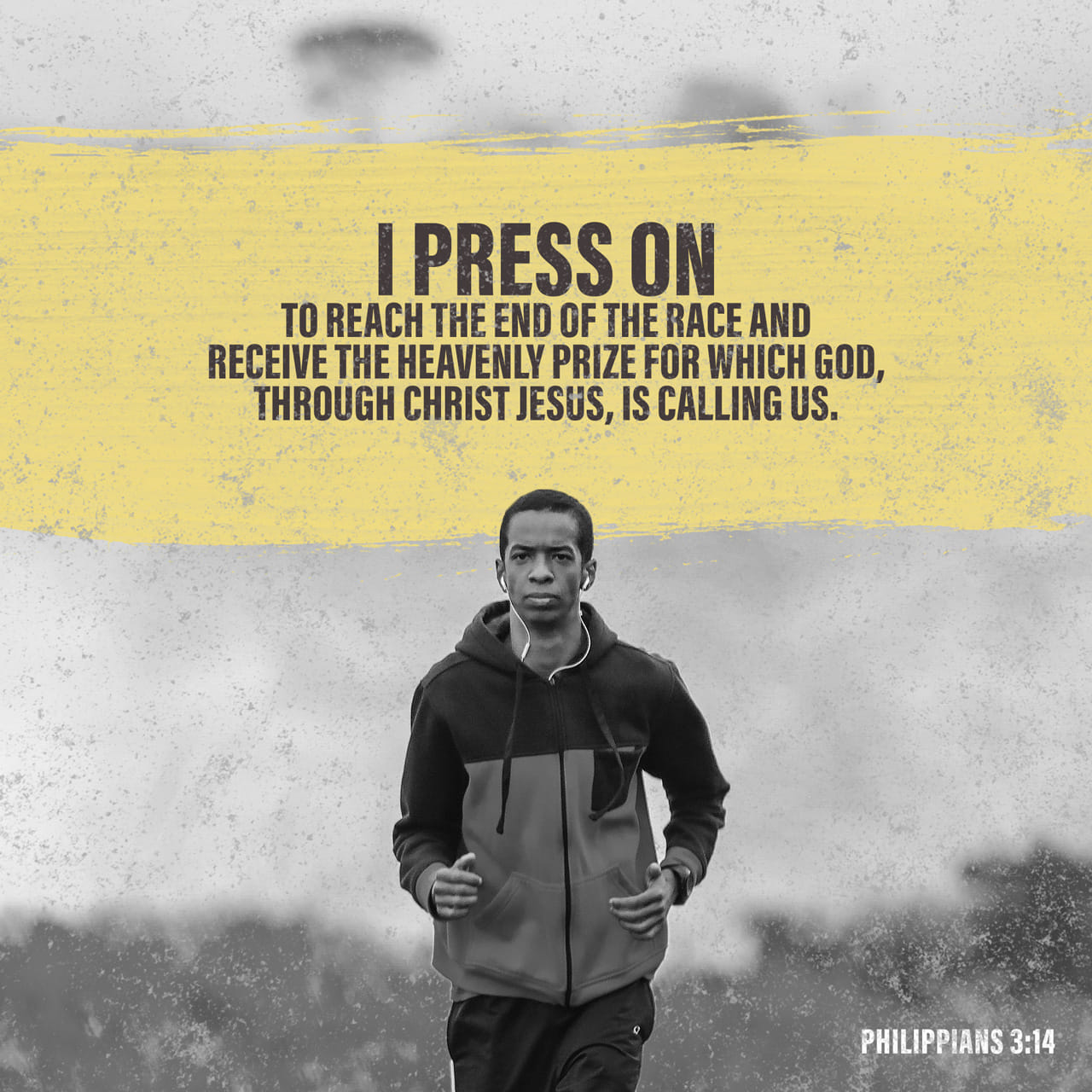
It means that right now — this very moment — I get up and I do the next “right thing.” Not the easy thing. Not the convenient thing. But the next “right thing.”
“Pressing on” means I won’t necessarily feel like doing it.
“Pressing on” means that sometimes it will take everything that’s in me to do it.
“Pressing on” means making a decision to push past guilt, shame, inadequacy, insecurity, fear and anxiety.
“Pressing on” requires guts, grit, strength and fierce determination.
“Pressing on” requires extra measures of God’s amazing, extravagant and relentless grace.
And, “pressing on” is never a one-and-done experience. “Pressing on” is a day-in, day-out reality.
Today, we can make a decision to “press on” and live fully in the present.
I love these words from Mother Teresa:
“Yesterday is gone. Tomorrow has not yet come. We have only today. Let us begin.” ―Mother Teresa
Today can be your first day of refusing to dwell on the past and determining that you will life fully in the present. “Let us begin.”
3. Move with confidence into your future.
For the last few weeks I’ve been reflecting on a promise in Isaiah 40.
“[God] gives strength to the weary and increases the power of the weak.
30 Even youths grow tired and weary, and young men stumble and fall;
31 but those who wait on the Lord [trust or hope in the Lord]
will renew their strength.
They will soar on wings like eagles;
they will run and not grow weary,
they will walk and not be faint.” —ISAIAH 40:29b-31
I’ve been gripped by the imagery in this passage. Look at Verse 31 again. “…those who wait on — hope in, trust in the LORD — will renew their strength…”
And, what happens when strength is renewed?
- They soar on wings like eagles.
- They run and do not grow tired or weary.
- They walk and do not faint or give out.
The thought that has gripped me for the past few weeks is that whether soaring, running or walking, those who choose to “wait on the Lord” are always moving forward! Always.
This reminds me of an incredible quote by the great MLK.
“If you can’t fly then run, if you can’t run then walk, if you can’t walk then crawl, but whatever you do you have to keep moving forward.” —Martin Luther King Jr
That’s it!
Keep moving forward!
That’s how we focus on forgetting.
Maybe today it feels like you’re soaring.
Or, maybe it feels like you’re running.
Or, maybe it feels like your progress has slowed to a walk.
Or, maybe in the words of MLK, you’re so tired and weary that you’ve stumbled into a crawl.
Whatever the case, keep moving forward with confidence in the future God has prepared and planned for you.
I’ll close with Jeremiah 29:11.
“For I know the plans I have for you,” declares the Lord, “plans to prosper you and not to harm you, plans to give you hope and a future.” —JEREMIAH 29:11 NIV
We often miss the fact that this passage was written to people living in exile. It was written to people who were going through an incredibly painful season of loss. But, in the middle of their exile, God reminded them that regardless of how bad things had been or how bad things could become, because of His steadfast faithfulness, hope is always a possibility and the future can be better and more promising than the past.
The Amplified Classic translation of Jeremiah 29:11 renders the last phrase of that verse as follows: “…to give you hope in your final outcome.”
God longs to give you “hope in your final outcome.”
Dwelling on the past is a guarantee for staying stuck.
But living fully in the present and moving with confident humility into the future can allow you to learn from the past as you live in the present and move into the future.
Why not make a decision today that you’ll focus on forgetting, live fully in the present and keep moving forward?
[1] Why It Can Be So Hard To Forget Unwanted Memories, Tue, 12 Mar 2019
https://www.scimex.org/newsfeed/why-it-can-be-so-hard-to-forget-unwanted-memories#:~:text=Forgetting%20memories%20may%20take%20more,them%2C%20or%20to%20remember%20them.
[2] MB, Win The Day, p xv, Kindle
[3] Lewis Smedes, Shame and Grace, HarperSanFrancisco (Zondervan Publishing House), 1993, p. 5-6.
[4] Mark Batterson, Win The Day, p 15, Kindle.