
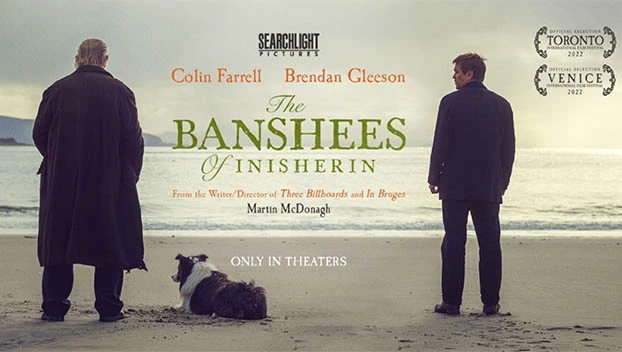
The Banshees of Inisherin may be the best movie I’ve seen this year.
Its story is simple.
What happens when a friendship ends for no apparent reason?
What is the impact on us emotionally and psychologically?
What if one of the friends will not entertain the possibility of reconciliation or even meaningful conversation, perhaps driven to their decision by some kind of madness, insanity or mental illness?
What if a person’s commitment to art and the pipe dream of writing music that will be remembered centuries after his lifetime causes him to abandon lifelong friends in pursuit of that art?
These are just a few of the questions this haunting film explores.
Our self-worth is so tied to the approval and acceptance of others that their rejection can drive us to decisions that lack reason and rationality. This state of emotional deregulation can cause us to say and do things that don’t reflect who we really are or measure up to the kindness and character we’ve demonstrated for years or even decades.
This is another theme explored in the movie.
Incredibly, Banshees is often funny. It made me laugh. Then, moments later, it is devastatingly heartbreaking. It also made me cry.
In Celtic folklore, a banshee is a supernatural being whose “wailing” or “screaming” can foretell the death of a family member. The movie derives its name from a song that one of the principle characters writes titled, “The Banshees of Inisherin.” Inisherin is the fictional small island in Ireland these “friends” call home. We never hear the song, but throughout the movie we can almost hear the banshees wail and lament the death of a friendship, the loss of connection and the loss of innocence.
My heart went out to the characters in this movie. I’ve “known” some of them. I’ve “been” some of them. I’ve found myself in the shoes of one of the characters, writing to a person he deeply loves, “I love you… And, I miss you. And, I hope I’ll see you again someday. If you ever come back home… Come back home…”
This movie’s exploration of loneliness and the significance we place upon our relationships was profoundly moving to me.
The setting for the film is stunningly beautiful. It made me want to visit this fictional island. The story on the other hand completely wrecked me. Colossal pain against the backdrop of an almost picture perfect environment. Life is sometimes like that.
Colin Farrell and Brendan Gleeson are both incredible.
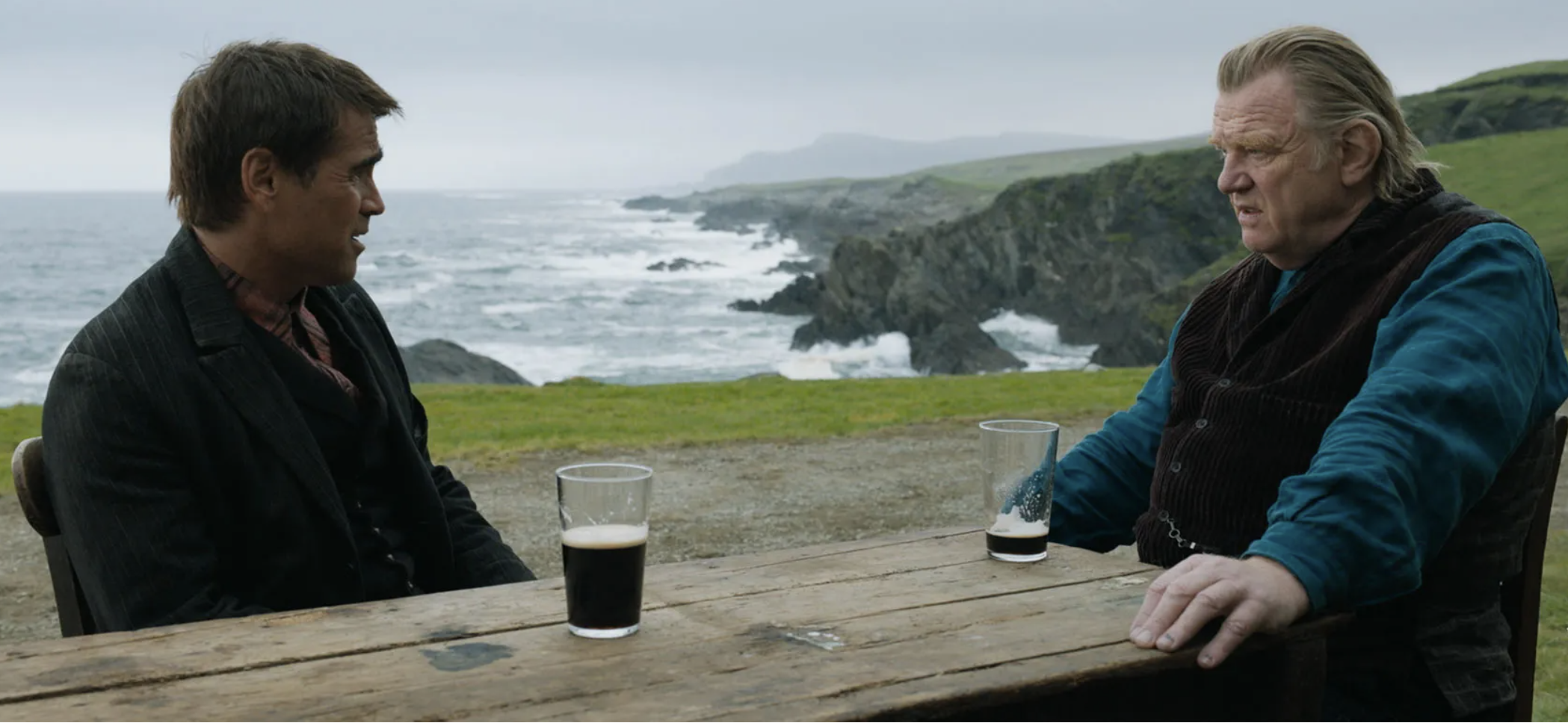
The rest of the cast is also superb. There’s not a weak performance in the movie.
The writing is brilliant.
The direction is extraordinary.
I seriously can’t imagine how you take such a small, simple story and evoke such a sense of loss, brokenness and longing for redemption and reconciliation, while also managing to make me, at times, smile and laugh. Hats off to the writer and director. Martin McDonagh of Three Billboards did both.
The musical score is also exceptional.
All of the above come together to create a compelling movie.
Relationships have been the greatest gift and joy of my life. Moments shared with my wife, family, friends, colleagues and acquaintances have been the best thing about my life.
But, quite honestly, relationships have also produced the most significant pain I’ve ever experienced in life, as well.
The loss of family and friends through death has sometimes felt overwhelming. One of my younger, really healthy friends died during COVID from COVID. I was one of the last people he called from his ICU hospital room. I’m sometimes surprised at how memories of this relatively brief, but meaningful friendship, will sneak up on me and shatter me with a sense of sadness.
“…creation has been groaning… And we believers also groan…”
—Romans 8:22-23
This past July my dog, Dallas, unexpectedly passed. I never knew that the death of an animal could create such a sense of loss. Again, sometimes memories of walks and runs with D sneak up on me and cause me to sigh or cry. (By the way, Banshees also explores how we attempt to anesthetize the pain of loneliness with the presence of a much-loved pet.)
Then, there’s the death of a relationship through my own personal sins, mistakes or neglect, or some incredibly stupid misunderstanding. Along with numerous failed attempts at reconciliation. These losses grieve me more than I can possibly convey.
So, how do we respond when a friend arbitrarily decides that it’s over?
One of the main characters in this film pursues restoration and reconciliation.
The other main character rejects every attempt, and even creates unthinkable consequences related to future attempts at restoring the friendship.
The film doesn’t provide us with any easy answers. In fact, one of the characters eventually sums it up this way: “Some things there’s no movin’ on from… And, I think that’s a good thing…”
But is it?
Is it really?
The good news of the gospel is that as long as there’s breath, there’s hope for reconciliation, restoration and redemption. And, that, because of the gospel, completely closing our hearts to someone who has hurt us — (by the way, that’s not a statement about someone who has physically, verbally or mentally abused us) — is never a wise decision.
So, since relationships hurt and demand a lot of work, should we just call it quits on connecting? Should we just close our hearts to love?
One character in the film makes that decision.
The Gospel, on the other hand, provides another alternative. C.S. Lewis described it like this:
“There is no safe investment. To love at all is to be vulnerable. Love anything, and your heart will certainly be wrung and possibly broken. If you want to make sure of keeping it intact, you must give your heart to no one, not even to an animal. Wrap it carefully round with hobbies and little luxuries; avoid all entanglements; lock it up safe in the casket or coffin of your selfishness. But in that casket—safe, dark, motionless, airless—it will change. It will not be broken; it will become unbreakable, impenetrable, irredeemable. The alternative to tragedy, or at least to the risk of tragedy, is damnation. The only place outside of heaven where you can be perfectly safe from all the dangers and perturbations of love is hell.”
—C.S. Lewis, The Four Loves
Love can produce pain.
Love can also bring joy.
But love is always worth the risk.
This movie challenged me to be grateful for my wife and family. To be thankful for the good and true friends God has given me. To treasure and treat these relationships as precious gifts. And, perhaps, most importantly, to not allow those who’ve closed their hearts to love, forgiveness and grace to define me.
WARNING: The Banshees of Inisherin contains frequent strong language and some violence.